Ceiling Fan Lights, Drone Ceiling Fans, and Remote-Controlled Comfort: A Smarter Way to Upgrade Your Space
Ceiling fans have come a long way from the simple pull-chain models that once defined home cooling. Today, they are design statements, lighting fixtures, and smart-home devices rolled into one. Whether you are remodeling a living room, outfitting a bedroom, or searching for a more energy-conscious way to stay comfortable, the latest options deserve a closer look. Three popular categories stand out: the ceiling fan light, the drone ceiling fan, and the ceiling fan with remote. Each brings a different kind of value, and together they show how much thought now goes into the humble ceiling fan.
Ceiling Fan Light: More Than a Bright Idea
A ceiling fan light combines two essential room functions in a single fixture: air circulation and illumination. Instead of installing a separate light kit and hoping it matches the fan’s style, homeowners can choose integrated designs that feel intentional from the start. Modern fan lights often use LED technology, which means lower energy use, longer lifespan, and less heat output than traditional bulbs. That last point matters in a bedroom or living room, where you want cooling, not extra warmth.
The best fan lights do more than turn on and off. Many offer dimmable brightness, adjustable color temperature, and memory settings that return to your preferred level each time. A warm white glow can make a bedroom feel calm, while a cooler white light can brighten a home office or kitchen. Look for fixtures with frosted diffusers, because they soften glare and spread light more evenly. Design-wise, fan lights range from minimalist discs and schoolhouse-style globes to cage designs and chandelier-inspired shapes. The right choice depends on whether you want the fan to blend in or become a focal point.
What to check before buying
- Lumens: Choose higher output for large rooms and lower output for bedrooms.
- Color temperature: Look for adjustable options if the room serves multiple purposes.
- Dimmability: Confirm compatibility with the fan’s remote or wall control.
- Style: Match the finish and shade shape to the room’s lighting and hardware.
Drone Ceiling Fan: A Futuristic Take on Airflow
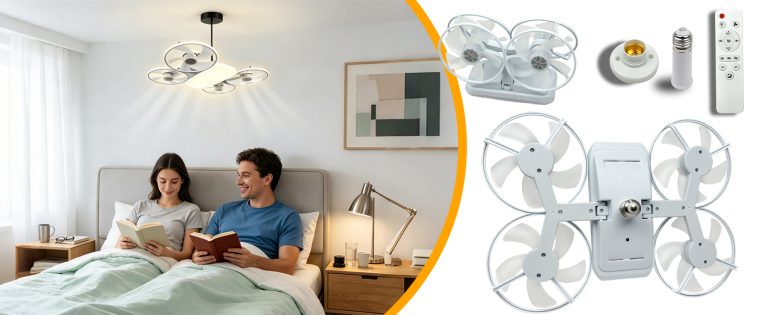
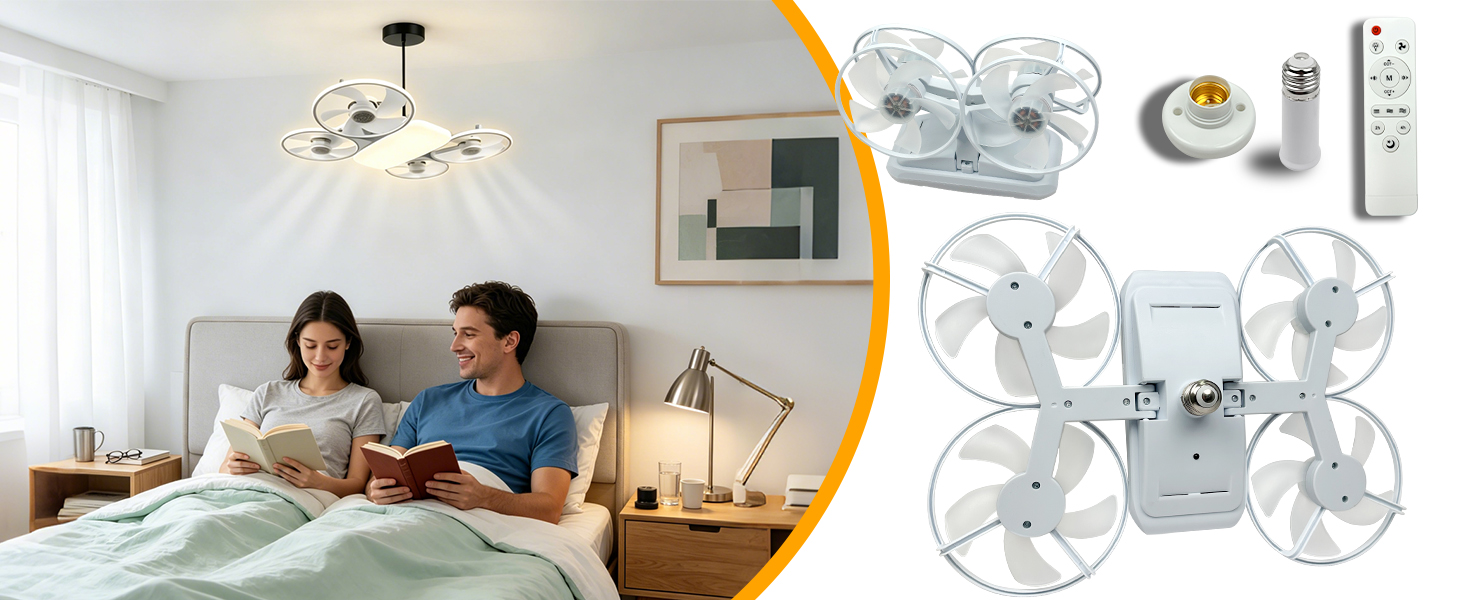
The drone ceiling fan is one of the more eye-catching innovations in modern fan design. Inspired by the compact, multi-blade look of drone propellers, these fans often feature a sleek central hub and several short, precision-shaped blades. The result is a fixture that looks tech-forward without being bulky. In open-plan rooms, home offices, and contemporary living spaces, a drone ceiling fan can add visual interest while still delivering practical air movement.
Many drone-style fans use DC motors, which are known for quiet operation and energy efficiency. They often include multiple speed settings, reversible airflow, and remote control. Because the blades are typically shorter and the housing is more compact, these fans can suit rooms where a large traditional fan would feel overwhelming. However, blade span still matters. A drone ceiling fan with a smaller sweep is better for small to medium rooms, while larger versions can handle bigger spaces. Installation height is also important: keep the blades at a safe distance from walls, cabinets, and tall furniture so the fan can move air efficiently without obstruction.
Design tip: A drone ceiling fan works best as a deliberate style choice. Pair it with clean lines, neutral finishes, and uncluttered surroundings so its unique shape can stand out.
Ceiling Fan with Remote: Convenience at Your Fingertips
A ceiling fan with remote solves a simple but real problem: reaching the fan should not require a ladder, a long pull chain, or a careful stretch. With a remote, you can adjust speed, turn the light on or off, dim the brightness, reverse the airflow, and set a timer from across the room. That convenience is especially valuable in bedrooms, vaulted ceilings, and accessible living spaces where wall switches may not control every fan function.
Remote-controlled fans are also more intuitive for households with different preferences. One person may want a gentle breeze at night, while another prefers stronger airflow during the day. A remote makes those adjustments quick and safe. When shopping, check whether the remote includes a wall-mountable cradle, whether it remembers settings after a power outage, and whether it can control both the fan and light independently. Battery life and replacement type are small details that make a big difference over time. If you plan to integrate the fan with a smart home system, confirm that the remote or receiver is compatible with your setup.
Remote features worth having
- Independent light and fan control for flexible daily use.
- Reversible airflow to support seasonal comfort.
- Timer settings for bedtime or energy-conscious use.
- Wall-mount holder to keep the remote easy to find.
Choosing the Right Combination for Your Room
The ideal setup depends on room size, ceiling height, and how you use the space. For a bedroom, a ceiling fan light with dimmable warm-white LEDs and a quiet remote-controlled motor is a strong all-around choice. For a modern home office or creative studio, a drone ceiling fan can add personality while keeping airflow adjustable. For a large living room, prioritize blade span, motor quality, and a remote that controls both light and speed without confusion.
Finally, do not overlook installation. A fan with a remote still needs proper mounting, secure wiring, and a downrod length suited to your ceiling height. If you are unsure, work with a qualified electrician. The right fan should feel like an upgrade every day: easier to control, better looking, and more comfortable than the fixture it replaced.
About the Author