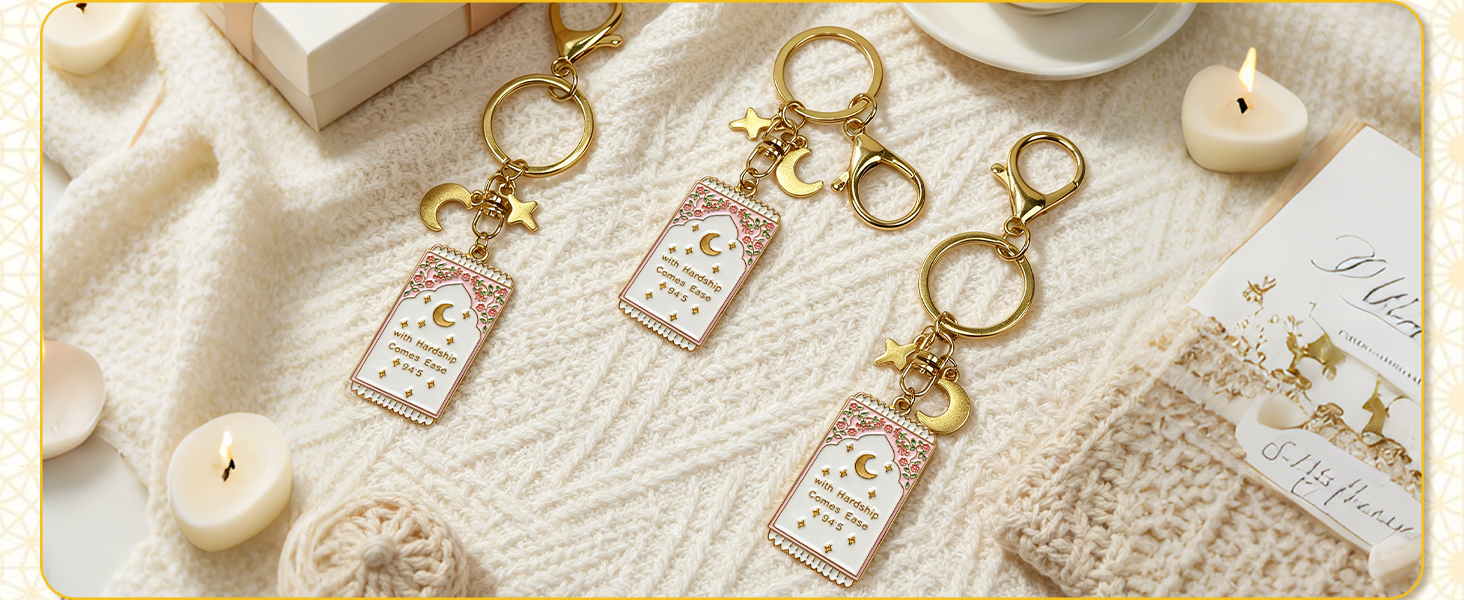
Islamic Keychains: Small Symbols of Faith, Identity, and Everyday Remembrance
An Islamic keychain is far more than a practical accessory. It is a small, portable expression of faith that travels with you through daily routines—from home to work, school, travel, and back again. Whether it features elegant Arabic calligraphy, a delicate crescent and star, a miniature mosque, or a simple prayer bead accent, a Muslim keychain can serve as a quiet reminder of what matters most. For many people, a religious keychain is also a meaningful gift, a personal keepsake, and a subtle way to carry identity and devotion into everyday life.
More Than an Accessory: The Meaning Behind Islamic Keychains
Keys are ordinary objects, but the keychain attached to them can carry extraordinary significance. An Islamic keychain often acts as a daily anchor—a visual cue to pause, reflect, and remember one’s values. A small engraved “Bismillah” may encourage mindfulness before leaving the house. A keychain featuring “Alhamdulillah” can inspire gratitude during a busy day. Even a simple geometric pattern inspired by Islamic art can create a moment of calm.
For Muslims living in diverse communities, a Muslim keychain can also be a gentle expression of identity. It does not need to be loud or elaborate. Often, the most meaningful designs are the most understated: a fine crescent, a tasteful piece of calligraphy, or a tiny mosque silhouette that catches the light.
A keychain is small enough to be overlooked, yet meaningful enough to be remembered.
Designs That Speak: From Calligraphy to Geometric Patterns
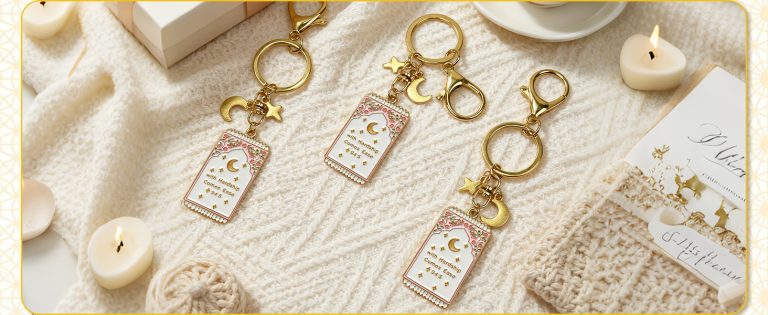
The variety of religious keychains available today is remarkable. Some designs focus on Arabic calligraphy, including words such as “Allah,” “Sabr” (patience), “Shukr” (gratitude), and “Tawakkul” (trust in God). Others draw from Islamic art and architecture, using geometric star patterns, arabesque motifs, crescent moons, and mosque domes. Prayer beads, also known as misbaha or tasbih, are sometimes incorporated as keychain charms, adding texture and tradition.
When choosing a design, consider the purpose. A sleek metal keychain with a single calligraphic word may suit a minimalist. A colorful enamel keychain with a mosque and crescent may appeal to a younger recipient. A leather keychain with a subtle embossed pattern can feel warm and personal. The best choice is one that reflects the wearer’s taste while honoring the meaning behind the symbol.
- Calligraphy keychains: elegant and personal, often featuring meaningful Arabic words.
- Geometric keychains: inspired by Islamic art, with repeating stars and interlocking patterns.
- Mosque and crescent keychains: recognizable symbols of faith and community.
- Tasbih-style keychains: a nod to prayer beads in a compact, everyday form.
Materials and Craftsmanship: Choosing a Muslim Keychain That Lasts
Because a keychain is handled constantly, durability matters. Stainless steel and zinc alloy are popular for their strength and resistance to wear. Leather offers a softer, more traditional feel, while wood and acrylic can create lightweight, artistic options. Look for smooth edges, secure clasps, and clearly engraved or printed details. A well-made Islamic keychain should not only look beautiful but also withstand the jingle of daily use.
Care is simple. Wipe metal keychains with a soft cloth, keep leather away from prolonged moisture, and avoid harsh chemicals that may fade calligraphy or enamel. Small habits can keep a religious keychain looking clean and respectful for years.
Religious Keychains as Thoughtful Gifts
A Muslim keychain makes a considerate gift for many occasions: Ramadan and Eid, graduations, weddings, new homes, or simply as a gesture of encouragement. It is personal without being intrusive, and practical without feeling ordinary. For a friend starting a new job, a keychain engraved with “Tawakkul” can be a gentle reminder to trust the journey. For a student moving away, a small mosque keychain can feel like a piece of home.
When giving a religious keychain, presentation matters. A simple gift box, a short handwritten note, or a small card explaining the meaning of the design can turn a modest item into a memorable keepsake. The thought behind the gift is often more valuable than the price.
Using and Caring for Your Islamic Keychain with Respect
Religious symbols deserve mindful handling. Keep your keychain clean, avoid placing it in disrespectful environments, and choose designs that represent your intentions thoughtfully. If the keychain includes sacred calligraphy, treat it with care and avoid rough treatment that could damage the words. For many Muslims, the purpose is not decoration alone but remembrance—a small, daily connection to faith in the middle of ordinary life.
Whether you choose an Islamic keychain for yourself or as a gift, the meaning lies in the intention. A small symbol can carry a large message: faith travels with you, quietly and consistently, wherever your keys may go.
About the Author